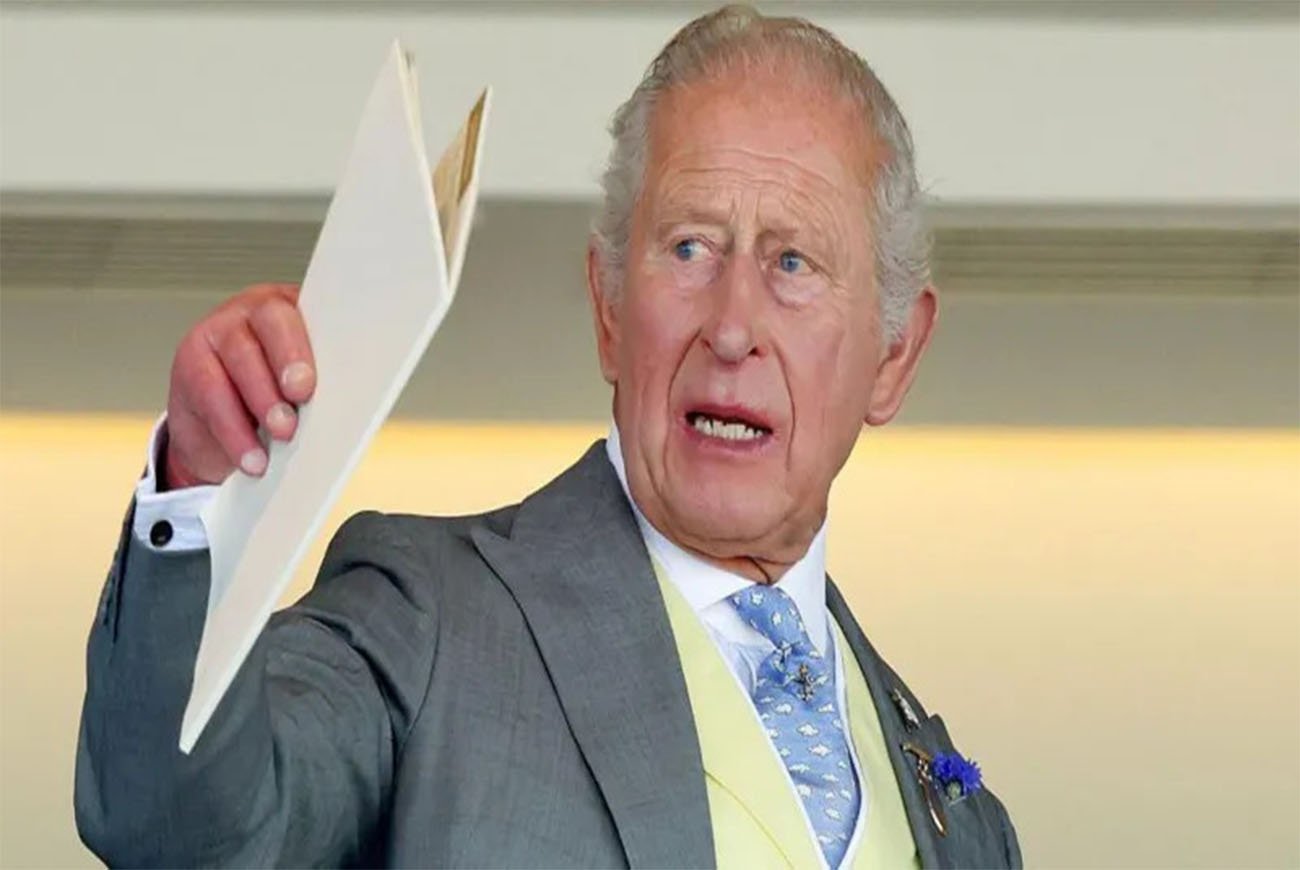
King Charles has made history by revealing his £12.9m tax bill, but the payment is far from ordinary. The announcement comes alongside the Royal Household publishing its annual financial report—a document that offers a rare glimpse into the finances of the monarchy, but also raises as many questions as it answers.
The King’s decision to publish his tax bill is unprecedented. No previous monarch has voluntarily disclosed their personal tax payments in such detail, and the move has been widely interpreted as an attempt to modernise the institution and demonstrate accountability to a public that is increasingly scrutinising the cost and privilege of the Royal Family.
Here’s what the document tells us—and doesn’t tell us—about the King’s unique tax situation.
1. The King pays some taxes voluntarily
King Charles is not legally required to pay income tax, capital gains tax, or inheritance tax. This exemption dates back centuries and is rooted in the constitutional principle that the Crown and the government are intertwined in ways that make traditional taxation impractical.
Instead, he voluntarily pays some income tax, capital gains tax, and inheritance tax according to an agreement with the government called the Memorandum of Understanding (MoU). The MoU came about in 1993 following public pressure over the cost of running the Royal Family and is occasionally updated, most recently in 2023 to reflect the change of monarch following Queen Elizabeth II’s death.
The fact that some of the King’s taxes are voluntary is not the case for regular taxpayers, and some argue this means that it is not a tax at all. HMRC defines tax as “money that individual people and businesses are legally required to pay to the government”. By that definition, a voluntary payment is something else entirely.
Dan Neidle, founder of Tax Policy Associates, a non-partisan tax research organisation, told the BBC: “If it’s voluntary, it’s not tax.” His point is simple but profound: the King’s payments, while substantial, are more akin to a charitable contribution or a gesture of goodwill than a legal obligation.
Critics have long argued that the voluntary nature of the King’s tax payments undermines the principle of fiscal accountability. If the monarch can choose whether to pay tax, they argue, then the system is fundamentally different from that which applies to ordinary citizens.
Meanwhile, the report says King Charles pays VAT, employer taxes, and local rates “in line with requirements”. These are taxes that apply to the Royal Household as an employer and as a consumer, and they are paid without the same controversy.
The voluntary nature of the King’s income tax payments is a reminder of the unique constitutional status of the monarchy. The King is not just a wealthy individual—he is also the head of state, and the rules that apply to him are shaped by centuries of tradition and precedent.
2. We don’t know how his tax bill was calculated
While the Royal Household describes releasing the King’s tax bill as part of its “commitment to transparency”, it’s not clear how it has been figured out. The report provides a headline figure, but it offers little insight into the methodology behind it.
So although we know that the King has agreed to pay tax on personal income, income from the Privy Purse not spent on official duties, and capital gains tax on private property sales, we don’t know what proportion of those taxes make up the £12.9m paid. The lack of detail has led some commentators to question whether the disclosure is genuinely transparent or merely a public relations exercise.
The Privy Purse is a source of private income for the ruling monarch. It mostly comprises income from the Duchy of Lancaster, an estate that belongs to whoever is the ruling monarch and includes, among other things, thousands of hectares of valuable land, castles, and quarries. The Duchy is a vast and varied portfolio, encompassing agricultural land, commercial properties, and residential developments across England and Wales.
The report does say that the Privy Purse received £25.2m from the Duchy of Lancaster for the year to 31 March, but that is not all of the King’s income. He also has personal earnings which the Royal Household says may include “investment income and trading profits”. The report does not put a figure on this, leaving a significant gap in the public’s understanding of the King’s overall financial position.
Buckingham Palace described the move to publish the King’s tax bill—as well as Prince William’s—as increasing transparency which it said aimed to “encourage wider understanding of our accountability”. The inclusion of Prince William’s tax payments is notable, as it extends the disclosure beyond the monarch to the heir to the throne.
Historian Anna Whitelock, professor of modern British history at Queen Mary University of London, said the King revealing his tax bill puts him “front and centre as a very rich man”.
“I do think this is very much a sign of the times, and it’s an attempt by the monarchy to try and get on the front foot and before they were absolutely pushed to try and show they are responsive and not reactive,” she told the BBC. Her analysis reflects a broader concern that the monarchy is under increasing pressure to justify its wealth and privileges.
However, Shaun Moore, tax and financial planning expert at wealth manager Quilter, said there’s ultimately not much detail to look at in the report.
“The headline figure is a large sum of tax and there’s also a large sum of income quoted as well, but there’s not any breakdown of about how that was arrived at,” he said. His observation highlights a fundamental tension: the Royal Household wants to be seen as transparent, but it is not willing—or perhaps not able—to provide the level of detail that would satisfy fiscal experts and critics.
3. He can deduct official royal business from the bill
Another thing not detailed in the report is what proportion of the Privy Purse income has been spent by the King personally and what proportion of it has been spent for official royal duties. This distinction is critical because it directly affects the amount of tax the King pays.
This matters because the King only voluntarily pays tax on income spent personally, meaning the King can effectively deduct royal business from his tax bill. In other words, if the King spends Privy Purse income on official duties—such as entertaining foreign dignitaries, maintaining royal residences, or supporting working members of the Royal Family—that income is not subject to tax.
The King also does not pay tax on the Sovereign Grant, which is money paid from the Treasury to the Royal Household to pay for official duties. The Sovereign Grant is funded by a percentage of the profits of the Crown Estate, a vast portfolio of property and land owned by the Crown but managed independently. It is designed to cover the costs of official royal functions, including staff salaries, travel, and the maintenance of royal palaces.
This system is a bit like how a self-employed person can file expenses on their self-assessment tax return for things like uniform or training. Except that the King has two tax-free ways in which he can fund official duties—the Sovereign Grant and the Privy Purse—whereas a self-employed person has only one.
Also, what counts as official duties is very different from what a regular self-employed taxpayer can expense. For example, the untaxed Sovereign Grant can be used to fund the staff costs and running expenses of the King’s official household while untaxed official duties that can be paid by Privy Purse include the personal income of working members of the Royal Family.
The Keeper of the Privy Purse, James Chalmers, defended the arrangement in a statement accompanying the report.
“While Royal finances can sometimes appear complex, the underlying system is clear in principle, structured in law and refined over time to ensure the Monarch can serve with independence, accountability and in the long-term interests of the nation,” he said.
But critics argue that the system is opaque by design, allowing the Royal Family to shield a significant portion of its income from public scrutiny. They point to the fact that the report does not specify how much of the Privy Purse income is spent on official duties versus personal use, making it impossible to verify the King’s tax calculation.
4. The broader context: A monarchy under scrutiny
The publication of the King’s tax bill comes at a time when the British monarchy is facing increased public scrutiny. The cost of the Royal Family, the source of its wealth, and the privileges it enjoys have all become subjects of debate, particularly in the wake of the COVID-19 pandemic and the cost-of-living crisis.
Public attitudes towards the monarchy have shifted in recent years, with younger generations particularly sceptical of the institution’s relevance and expense. Polls have shown declining support for the monarchy, especially among under-35s, who are more likely to question why the state funds a hereditary institution.
The Royal Household has responded by attempting to modernise its image, reducing costs, and increasing transparency. The publication of the King’s tax bill is part of that effort, but it has also exposed the limits of the monarchy’s willingness to open its books.
The report comes just weeks after the release of the Sovereign Grant accounts, which showed that the cost of the monarchy had risen to £89m for the 2023-24 financial year, an increase of £4m from the previous year. The rise was attributed to inflation and increased costs for building maintenance and utilities.
Critics have seized on the figures to argue that the monarchy is becoming more expensive at a time when ordinary households are struggling. Supporters, meanwhile, point to the economic benefits of the monarchy, including tourism and the soft power it generates for the UK.
The King’s tax bill is a reminder that the monarchy occupies a unique position in British life—one that combines tradition, privilege, and accountability in ways that are often difficult to reconcile.