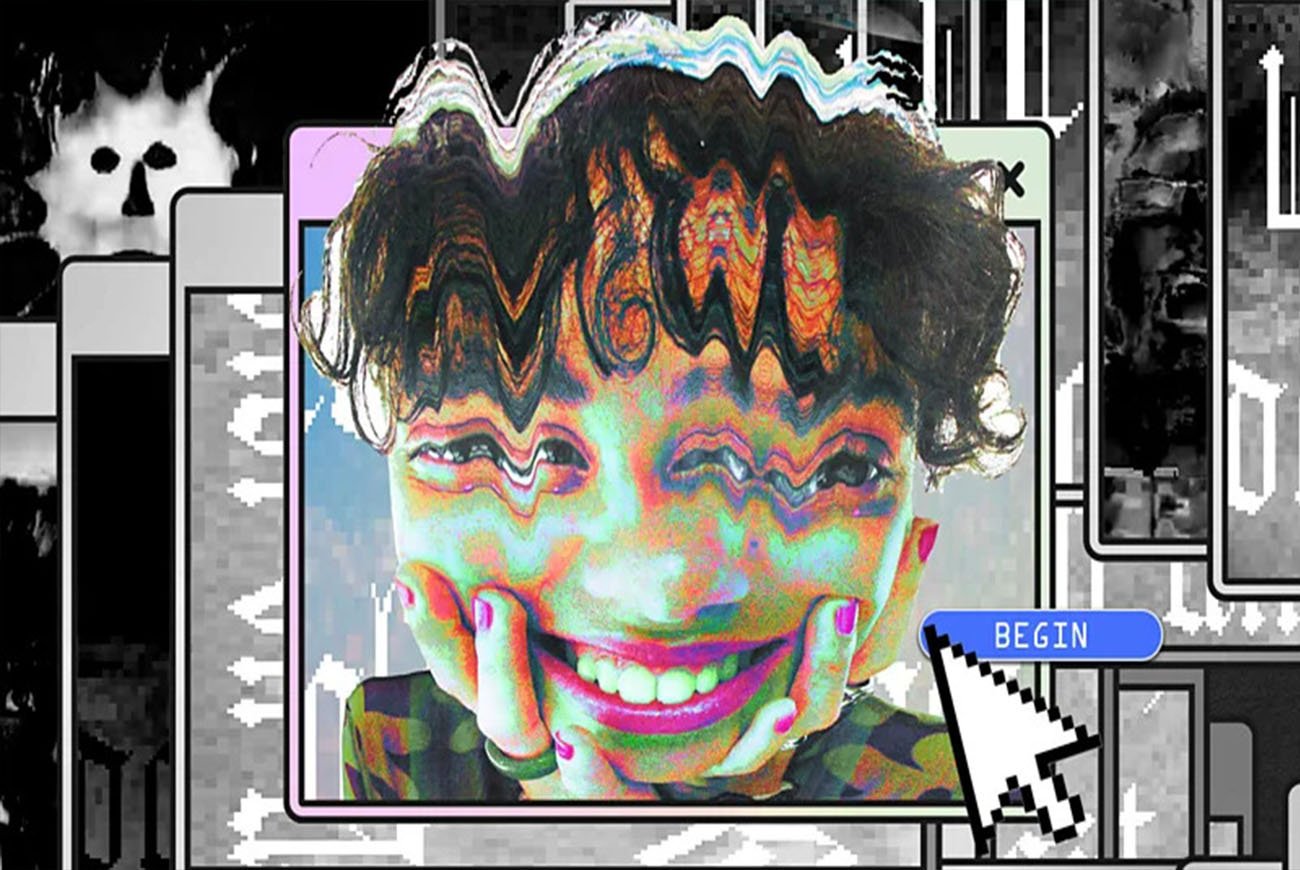
There’s a hidden corner of TikTok the algorithm won’t show you, full of weird, creepy and downright disturbing videos. It could all be a myth – or it may be a preview of the internet’s future.
TikTok has a reputation for serving up an endless stream of videos that are, in general, fairly positive. Some detractors even call it sanitised—a carefully curated feed of dance challenges, cooking tutorials, and feel-good content designed to keep users scrolling without ever confronting anything truly challenging or uncomfortable. But beneath the surface are billions of videos TikTok normally won’t show you. Some are boring. Some are bizarre. Some of them are truly unsettling.
Rumour has it if you stay up too late, scrolling for hours until you exhaust TikTok’s normal recommendations, you might get a momentary glimpse. But users of the platform say they’ve found a way to go deeper.
With the right tricks, you can reach this uncanny digital space, that’s weirder, darker and more grotesque than the happy path the algorithm typically steers you along. It’s known as the “TikTok Farlands”.
The best way to reach it, apparently, is to plug in a string of random numbers and letters that another user has posted in the comments of a video. These codes function like secret keys, unlocking doors that the algorithm would prefer to keep closed.
“You can’t get there through algorithmic recommendation alone – you need a human to invite you in,” says Aidan Walker, an internet culture reporter and meme researcher, in a post on the subject. His words capture the essence of what makes the Farlands so intriguing: it is a human-driven rebellion against machine curation.
The Interface
To dive deeper into the edges of TikTok’s Farlands, listen to this episode of The Interface.
Conversations about TikTok’s Farlands erupted over the last few months, blending conspiracy theories and urban legends with earnest discussion about the power of social media companies. What started as a niche curiosity has grown into a full-blown cultural phenomenon, with thousands of users sharing codes, discussing their discoveries, and debating the meaning of it all.
Users have figured out ways to hijack the TikTok algorithm to make it surface videos they believe the app doesn’t want you to see. It is a social movement as well as a meme trend. People are pushing up against the walls of the machine, testing its limits and challenging its authority.
And in a world of AI slop and mindless scrolling, it’s left me more optimistic about the future of the internet than I’ve felt in a long time. The Farlands represents something rare: a space where human curiosity, creativity, and defiance still matter more than algorithmic optimisation.
Down the rabbit hole
The name “Farlands” comes from a famous, ancient glitch in the game Minecraft. In early versions of the game, if you walked far enough, it caused an error that generated distorted and chaotic landscapes full of tunnels and weird structures. It was a bug that became a feature, a strange and beautiful unintended consequence of the game’s code.
“The Minecraft Farlands were the edge of the game. You would literally reach the end of the world, and you could not go further,” says Jessica Maddox, an associate professor of media studies at the University of Georgia in the US, who focuses on social media. The comparison is apt: the TikTok Farlands are the same idea. “It’s the end of the internet where things get weird. You’ve left the mainstream and taken a wrong turn.”
Visitors to the Farlands are hijacking the TikTok algorithm to spread videos the app might not promote otherwise. Some are genuine oddities—clips of forgotten TV shows, amateur animations, or experimental art. Others are more unsettling: distorted faces, glitchy nightmares, and cryptic messages that seem designed to unsettle rather than entertain.
With the help of comments left under Walker’s video post, I was able to follow some random strings of characters into the void. I plugged a code into the search bar, and what I found was nothing like my usual experience on TikTok.
Nightmarish, AI-generated figures paraded across the screen. Faces contorted in a haze of pixelated distortion. Some kind of alien creature with his veins plugged into the wires of a TV screamed in agony, as a teenager looked on with a videogame controller. Another video showed a figure standing in a field, slowly dissolving into a flock of birds, the image degrading with each passing second.
A lot of it was too disturbing for the BBC to link to. (And I’d offer a little caution before you go looking yourself.) The content is not for everyone, and some of it is genuinely unsettling in ways that linger long after the screen goes dark.
Even the strings of random letters and numbers that people share like passwords to the Farlands are a mystery. Sometimes, users tag their own videos with these codes and share them to promote their work. But I spoke to a few people who swore they found Farlands codes through guesswork by mashing the keyboard. The randomness is part of the appeal: there is no map, no guide, no guarantee that your search will yield anything at all.
Some of the codes seem to bring up truly random results. It’s hard to parse what’s really going on, as TikTok’s search function gives different results to different users. What one person finds may be invisible to another, adding to the sense of mystery and exclusivity.
The whole idea is deliberately subverting TikTok for your own purposes, says Walker. “That’s part of the thrill. You’re using the platform in a way it’s not built to be used,” he tells me. “You’re past the limits of the normal TikTok, out at the frontier where nobody really knows what’s going on.”
In the comments of these strange videos you’ll also see people writing “I WANT TO STAY IN THE FARLANDS” over and over in large blocks. Some travellers seem to believe posting a 500-word-long comment triggers the algorithm to show you similar content. Is that true? Impossible to say. Social media algorithms are a black box, and their inner workings are fiercely guarded secrets.
I contacted TikTok but they didn’t respond. The silence from the company is perhaps telling: the Farlands exists in a grey area, not quite violating any terms of service but definitely pushing against the boundaries of what the platform was designed to show.
“People are trying to take control back of their feeds and their online experiences,” says Maddox. “It speaks to being fed up with algorithmic feeds, and our anxieties about the force they play in our lives, dictating what we see.”
“The internet is so overwhelming. In a way, the Farlands represents hope that you’ve actually found the end and you’ve reached a place where you could actually stop.”
Everything old is new again
The whole “edge of the internet” conversation is a bit of a paradox.
The goal of “entering” the Farlands is uncovering hard-to-find videos. Some are genuinely weird, made by people who don’t understand or care about the norms of social media. Other videos are intentionally artistic or edgy, crafted by creators who are deliberately pushing against the boundaries of what is considered acceptable or normal.
But some of these supposedly “obscure” Farlands posts have millions of views. And as its popularity has increased, so some users have made new videos to fit the trend. Finding this stuff is easier – just type in “Farlands”. But users say this isn’t the real deal. Real Farlands videos have no tags or titles, and “certainly not the Farlands hashtag”, one user commented in a popular video.
It really feels like this hodgepodge of a bunch of different stuff from all over the internet’s history… Niche, kind of spooky, kind of bizarre – Aidan Walker
A true Farlands video, some will tell you, will only have 30 views and be from an account with no followers, reachable only for those determined enough to find it. It is the digital equivalent of a hidden room in a vast mansion, accessible only to those who know exactly where to look.
The TikTok Farlands are relatively new, but a lot of the ideas, memes, aesthetics and videos themselves are old. Some of it resurfaces tropes from the era of creepypasta, a genre of online ghost stories from the early modern internet. The Slenderman, Ben Drowned, and other internet legends all emerged from the same impulse: the desire to find something hidden, something that exists just beyond the reach of the mainstream.
Many videos share the deep fried meme aesthetic, where images are passed through numerous filters until they’re pixelated and washed out – a trend at least as old as 2015. And people discussed the hidden side of TikTok in 2019 and 2020 as users explored “Deeptok”, a similar phenomenon that captured the imagination of early TikTok explorers.
“It really feels like this hodgepodge of a bunch of different stuff from all over the internet’s history,” says Walker. “Niche, kind of spooky, kind of bizarre.”
Still, there’s also something new here. For one, a lot of popular content that people describe as Farlands feels like commentary on technology and social media itself. It is not just weird for the sake of being weird; it is often saying something about the platform on which it appears.
Shane Moore, better known as @smoorel8r, makes posts that begin as stereotypical TikTok food reviews, before the image degrades in the style of a corrupted video file, with horror-movie-style scenes that glitch in and out. His work is both a parody of TikTok’s content conventions and a genuine artistic exploration of digital decay.
Others, such as @realityisoptional.net and Lucas Wilm, make videos that look less like social media and more like the video art you find in museums. Their work is atmospheric, abstract, and often deeply unsettling—yet it finds a home in the Farlands, far from the polished content that dominates the platform.
A number of creators told me they’ve been making this style of content before anyone started talking about the Farlands. The trend did not create the content; it simply gave it a name and a community.
I asked Walker if covering the Farlands in a mainstream media outlet like the BBC might make the whole thing uncool. “It’s already mainstream,” he says. “It’s a big part of some people’s media diets.” In other words, the cool kids have probably moved on by now. But that does not diminish the significance of the phenomenon.
But there’s feeling in the Farlands discourse that something subversive is going on – especially when people are finding methods to manipulate the algorithms. There is a sense of agency, of pushing back against the machine that has come to define so much of our digital lives.
“It defies the logic of what should make good content,” Maddox says. “TikTok has stuff it likes. Instagram has stuff it likes. The Farlands goes against that.” It is a rejection of the algorithmic imperative, a reminder that not everything can or should be optimised.
More like this:
- An AI became a crypto millionaire. Now it’s fighting to become a person
- The ‘drunk computer’ that’s revealing YouTube’s secrets
- Why people are abandoning Bluetooth headphones
A sign of things to come?
Though it’s worth remembering that if it all makes you spend more time on TikTok, that’s exactly what the company wants. The platform benefits from engagement, even if that engagement comes from users exploring its darker corners.
However you spin it, the Farlands is part of a larger trend. People have been switching to “dumb phones” for years. Analogue cameras and wired headphones have made a comeback. AI backlash has grown so popular the Pope is talking about it. There is, in general, a feeling of tech rebellion rumbling across our society.
Maybe it’s just an interesting historical blip. Or it could be a sign of things to come. As algorithms become more sophisticated and more controlling, the desire to escape them—to find spaces that resist optimisation and defy prediction—may only grow.
The Farlands is not just a weird corner of TikTok. It is a statement. It is a reminder that the internet, for all its flaws, is still a place where people can find the unexpected, the strange, and the genuinely new. And that is something worth celebrating.