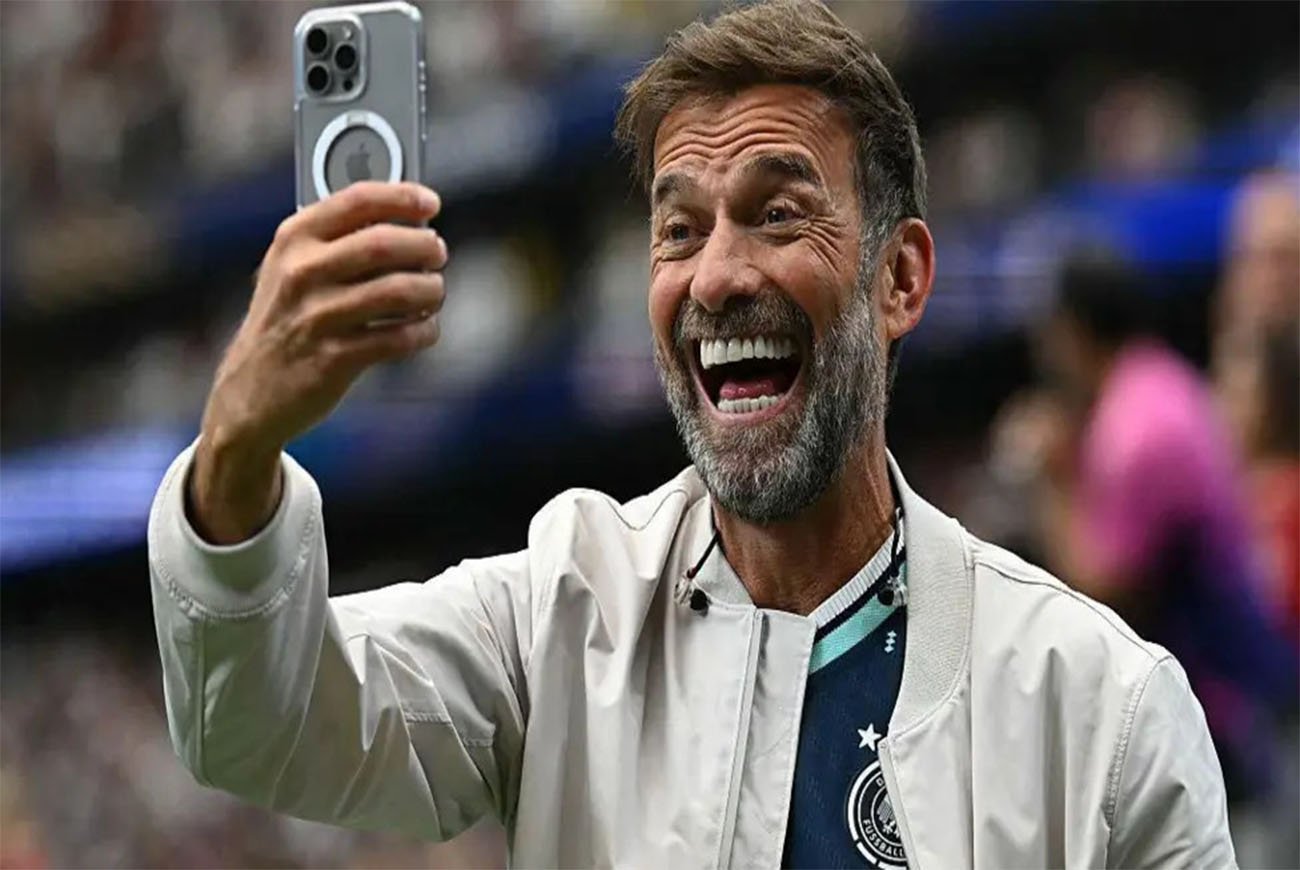
For Germany fans the unthinkable has happened. Not only another early exit at a major tournament but a first World Cup penalty shootout loss. The defeat to Paraguay in the last 32 has sent shockwaves through the nation, leaving fans and pundits alike searching for answers.
As the dust settles the question every fan is asking is will the German Football Association take the plunge and sack head coach Julian Nagelsmann and bring in Jurgen Klopp. The speculation has been relentless, dominating headlines and social media discussions across the country.
Nagelsmann, the 38-year-old former Bayern Munich boss, refused to quit following Germany’s painful last-32 defeat by Paraguay, saying “I’m not someone who runs away”. His defiance is understandable, but it may not be enough to save his job.
But the German fans are in need of hope and Nagelsmann simply cannot provide that at this moment. He hasn’t done himself any favours with the way he communicates in public – easily irritable and brash. Meanwhile charismatic Klopp, the former Liverpool and Borussia Dortmund boss, has been a star pundit on German TV during the World Cup, being his usual funny and charming self.
Fans know that you cannot simply replace 20 players, but you can replace the manager. The contrast between the two men could not be starker, and it is fuelling the growing calls for change.
Germany in danger of falling further behind
When Germany fans woke up on Tuesday morning, they surely felt embarrassed about what happened in Boston against Paraguay. The defeat was not just a loss; it was a humiliation, a reminder of how far the once-mighty German machine has fallen.
Since their most recent World Cup success in 2014, Germany have twice failed to make it out of the group stage – in 2018 and 2022 – and lost in the first knockout match of the 2026 finals. The pattern is clear: a steady decline that has yet to be reversed.
Domestically German football is booming. Bundesliga stadiums are packed; even third-division games attract tens of thousands of spectators each weekend. The infrastructure is there, the passion is there, and the financial resources are there. But a great football nation is in danger of falling behind on the international stage.
Florian Wirtz, Jamal Musiala and Bayern Munich’s latest rising star Lennart Karl are among a new crop of players that can excite fans, but the depth of extraordinary talent does not exist in Germany at this point in time. The conveyor belt of world-class players that once seemed inexhaustible has slowed to a trickle.
Following a quarter-final exit at the 1998 World Cup and an embarrassing group stage exit at Euro 2000, the German football association made fundamental changes to the nationwide development of youth players and the education of football coaches. That investment paid off spectacularly, culminating in the 2014 World Cup triumph. Whether the German FA is capable of making substantial changes once again remains to be seen.
Structural changes will need time but a managerial change could happen almost immediately. The temptation to make a quick fix is strong, and Klopp’s availability only adds to the pressure.
Nagelsmann’s mistakes
In the aftermath of Monday’s loss, Nagelsmann rejected the notion that he should resign. His refusal to accept responsibility has not gone down well with fans or pundits, who see it as a sign of stubbornness rather than strength.
Germany captain Joshua Kimmich said he hoped that Nagelsmann remains in charge, arguing that the team have been responsible for the embarrassing outcome of this World Cup campaign. “The fact of the matter is that we couldn’t give the people at home [what we wanted],” said Bayern Munich’s Kimmich.
“That is a shame, especially in a time when it would have been good for Germany if we had something we could be proud of. The national team is not that.”
It is commendable that Kimmich and others want to take the blame for the early exit. But the manager was in charge of this underwhelming campaign. The buck stops with him.
Nagelsmann was responsible for the controversial return of 40-year-old goalkeeper Manuel Neuer, who didn’t look his best at times during this tournament. The decision to recall the ageing goalkeeper, rather than blooding a younger replacement, was widely criticised.
Nagelsmann was responsible for using Kimmich as a right-back instead of employing him in his usual role in central midfield. The decision weakened the team’s midfield and left Kimmich unable to exert his usual influence on the game.
It was Nagelsmann’s decision to rely on ageing players such as Leroy Sane and Leon Goretzka. Both players have been past their best for some time, and their inclusion in the squad was seen as a sign of Nagelsmann’s conservatism.
Nagelsmann’s contract, which was extended in early 2025, runs until after Euro 2028. It might be quite expensive for the German FA to sack the well-paid manager but it could be the only way to make a fresh start. The financial cost of sacking him may be high, but the cost of keeping him could be even higher.
‘Embarrassment’ – how German media reacted
German newspaper Bild described the result as “The next German football nightmare” and an “embarrassment” saying it was a “bitter night for the German national team”. The reaction was swift and brutal, reflecting the depth of frustration felt by fans and pundits alike.
Bild columnist and former Germany captain Mats Hummel added: “There’s definitely a need for consequences. This needs to be addressed – both by the national coach himself and by the federation. At the very least, there have to be discussions about it.”
Die Welt reported that Monday evening was “a disaster for Nagelsmann and the players”, calling the result a “humiliation”. The choice of words was deliberate and devastating.
A Der Spiegel headline said: “Nagelsmann sees every mistake – except his own” with the article suggesting he “looks like someone who plugs one leak after the other and overlooks the fact that the boat is hurtling towards an iceberg”. The metaphor was apt: Nagelsmann has been so focused on putting out small fires that he has failed to see the bigger picture.
Some media coverage took strong exception to how Germany’s Chancellor Friedrich Merz had reacted to the defeat. Merz wrote on his official X account: “Even though the elimination hurts: What a game! With your commitment and team spirit at this World Cup, you have thrilled our country. We are proud of you.”
Columnist Marion Horn said the post was a “disaster” and “devastating”, adding: “The brutal World Cup defeat against Paraguay, the coach, the attitude and the performance of the German players are symptomatic of the state of the entire country.” Her analysis was damning, linking the football team’s failure to broader national malaise.
Klopp waiting in the wings?
The one figure that had already started to overshadow everything before Germany were eliminated is Klopp. His presence as a pundit has been a constant reminder of what could be.
One slip of the tongue led to headlines at home. Before the opening game he and former Germany international Thomas Muller discussed their preferred line-ups and Klopp said that Nagelsmann would “still” decide over the personnel. He later apologised for it, saying: “I will turn 59 the day after tomorrow and I’m still stupid.” And yet, one could get the impression that Klopp was there as a sort-of shadow minister, in position to replace the incumbent sooner rather than later.
Klopp joined Red Bull as “head of global soccer” in early 2025 and has been involved in crucial decisions at various Red Bull-owned or funded clubs, while rejecting approaches from teams like Real Madrid. The Red Bull role is lucrative and high-profile, but it is not the same as being in the dugout.
As the rumour goes, Klopp might be done with coaching in club football, but the national team may still intrigue him. The prospect of leading Germany to a major tournament victory is a tantalising one, and it may be the challenge that draws him back into management.
During his illustrious career, he saved Borussia Dortmund after the club had been on the verge of bankruptcy, and years later, he pulled Liverpool out of no man’s land in the Premier League standings. It might be time for him to save another team and write the final chapter of his coaching career.
The road ahead
The decision facing the German FA is a difficult one. Nagelsmann is a talented coach with a bright future, but his time with the national team has been marked by underachievement and frustration. Klopp, on the other hand, is a proven winner with a track record of turning struggling teams into champions.
The German FA must weigh the cost of sacking Nagelsmann against the potential benefits of hiring Klopp. They must also consider the message that such a decision would send to the players and the fans.
One thing is clear: something needs to change. Germany cannot afford to continue on its current trajectory. The nation that once dominated international football is in danger of becoming a footnote.