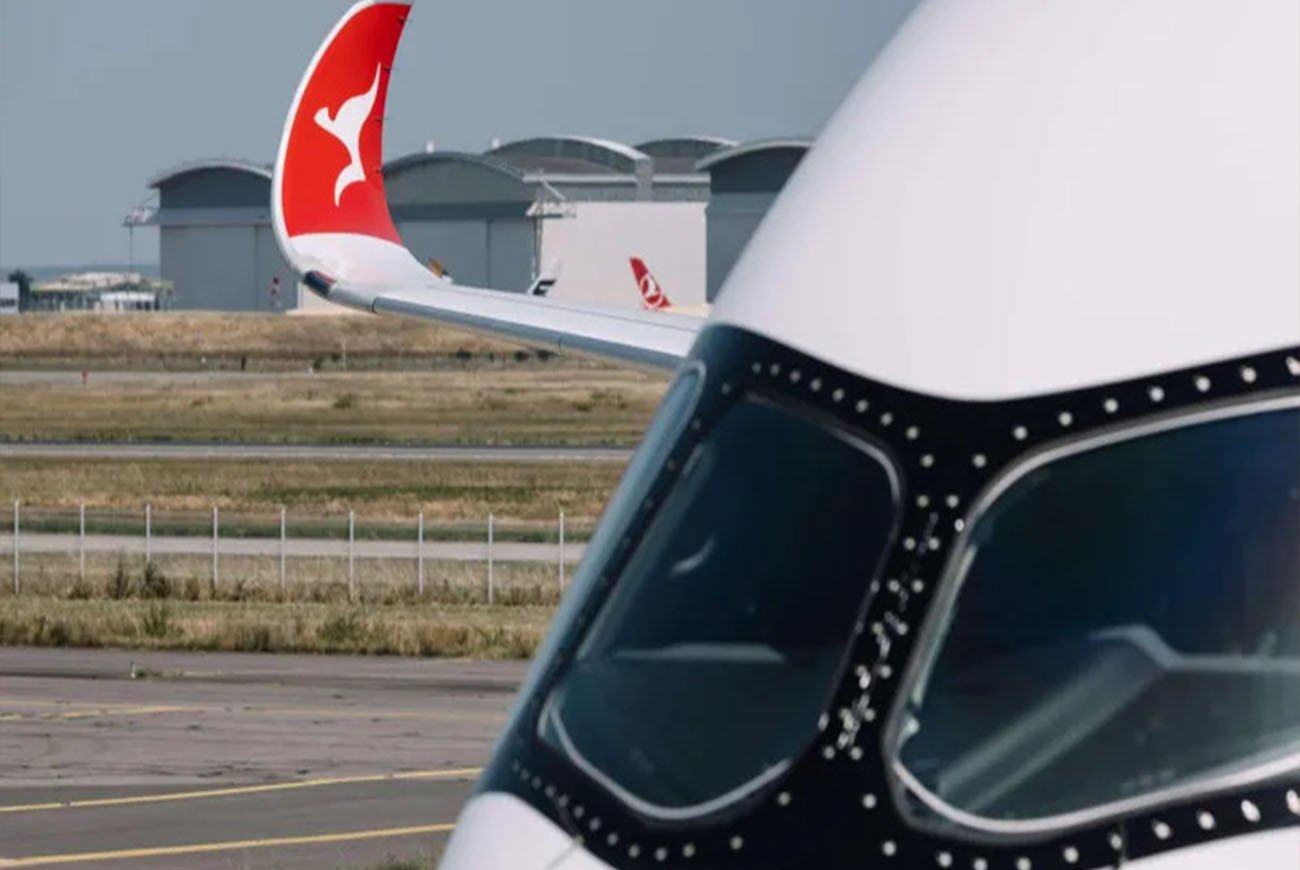
On a stage at the Airbus headquarters in Toulouse, the chief executive of Australian airline Qantas declared with unmistakable confidence: “The tyranny of distance has finally been conquered.”
Vanessa Hudson was in the French city last week to announce what promises to be a milestone in aviation history—the world’s first 20-plus hour flight route. The announcement, years in the making, marks the culmination of a project that has captured the imagination of travellers and industry insiders alike.
The airline first flew what it named the Kangaroo route between London and Sydney in 1947. At the time, it was an odyssey spanning seven stops and four days—a gruelling journey that tested the endurance of even the most seasoned travellers. Those stops have been gradually reduced over the decades, with Qantas now stopping only once, in Singapore, on the way through.
But 80 years after that 1940s venture, the first non-stop flight between the two cities is set to take off from October 2027. Using specially designed ultra-long-haul Airbus planes, Qantas expects to shave about four hours off the current journey time. The flight is expected to last around 22 hours, making it the longest commercial flight in history.
The much anticipated—and delayed—breakthrough comes after a turbulent few years in the airline’s history, and bosses are banking on customers embracing the premium but marathon flight.
“We feel really confident that this is going to be a success,” Hudson told the BBC in an interview that underscored her determination to restore Qantas’s reputation as a world-class carrier.
Some analysts say it is a major milestone in aviation history. But is it really what people want? That question hangs over the project, as Qantas prepares to invest billions in aircraft, infrastructure, and marketing to make the route a success.
1. The price of progress: Comfort versus cost
Qantas has overcome some significant challenges to get this far—and still faces others.
The flight will save money on landing fees by eliminating a stop, but Hudson admits the longer flight has a higher relative fuel bill. The aircraft will burn more fuel over the extended journey, and the cost of that fuel is unpredictable, given the volatility of global oil markets.
There are also fewer seats on the specially designed aircraft, nearly half of which (40%) will be premium economy, business, or first class. That means fewer economy seats available, which could push up prices for budget-conscious travellers. The airline is betting that passengers will be willing to pay a premium for the convenience of a direct flight, but that bet is not without risk.
To counter the increased risk of health issues such as deep vein thrombosis, which can occur from flying for such long periods, Qantas has increased the legroom in economy and also created a dedicated “wellness” space where passengers can follow stretching exercises on a screen and have a little more room to move about. The airline has consulted with medical experts, sleep scientists, and nutritionists to design an onboard experience that minimises the physical toll of ultra-long-haul travel.
Hudson points to the success of the Perth to London route, saying “customers have been prepared to pay a premium” for that service. The Perth-London flight, which takes around 18 hours, has been a commercial success since its launch, giving Qantas confidence that there is a market for even longer journeys.
Australian travel agent Karis Heemskerk is among the fans of spending more time on one plane to get to their destination faster. The 41-year-old has taken the roughly 18-hour flight from Perth to London a couple of times, including with her husband and two children, and says being able to fly direct is “amazing” and an efficient use of time.
“I think the direct flights cut time and there is no risk of missed connections and the stress of your luggage being lost,” she told the BBC. Her experience reflects the growing appeal of direct flights among families and business travellers who value convenience and reliability.
“Cons are that it can be gruelling and it is a long time for some individuals to be confined to a cabin. [But] overall, I’m a big fan of the direct flights.”
However, some frequent fliers such as Tom Gill are less interested. The 33-year-old cultural consultant, who is originally from London but lives in Melbourne, travels at least once a year to London plus other trips to Europe.
“I don’t mind an airport stopover at all: the idea of sitting in a plane for 20, 21 hours non-stop would be quite unbearable for me,” he says. For Gill, the main factor is cost. Given the new route is expected to cost about 20% more than its current Sydney to London offering with a stopover, he doesn’t think it will be a flight he’ll catch anytime soon.
“To be clear, I’d try anything once. If it was cheaper I would definitely consider it.”
2. Who will actually fly it? A narrow but lucrative market
Research from ABTA suggests an increase in the number of people who travelled from the UK to Australia in the past year, particularly among 18-24-year-olds. Young travellers, often on gap years or working holidays, are a growing segment of the market, but they are typically price-sensitive and may not be willing to pay a premium for a direct flight.
“Australia is for many of us a bucket list destination,” the UK travel industry body told the BBC. The allure of the country’s natural beauty, vibrant cities, and unique wildlife continues to draw travellers from around the world, creating a steady stream of demand for flights.
But Bryan Terry, managing director of Alton Aviation Consultancy, says demand for this sort of service is narrow—posing a risk for the airline.
“Qantas is targeting premium and time-sensitive travellers willing to pay a meaningful premium to avoid a Dubai, Singapore, or Los Angeles connection,” he says. These are typically business travellers, wealthy tourists, and frequent flyers who value their time above all else.
Singapore Airlines currently has the world’s longest flight—between Singapore and New York—and Terry notes the route proves people are willing to pay “significantly more” to eliminate a stopover. That flight, which takes around 19 hours, has been a commercial success, suggesting that there is a viable market for ultra-long-haul travel.
However, the Singapore-New York route serves two major global financial centres, with a high concentration of business travellers. The Sydney-London route, while significant, may not generate the same level of premium demand. Qantas is betting that the combination of business travel, tourism, and the Australian diaspora in the UK will create sufficient demand to fill the planes.
The airline has also partnered with major corporations to offer corporate travel packages, and it is marketing the route to luxury travellers who are willing to pay for the ultimate in convenience and comfort.
3. The last frontier: Engineering a 22-hour flight
Terry says Qantas is conquering “one of the last frontiers in commercial aviation”.
“Every generation of aircraft has chipped away at Australia’s isolation, but a non-stop Sydney to London or New York has always been just out of reach,” he adds.
It’s an effort that has been years in the making, but which has also faced several setbacks and delays. The programme to develop the non-stop London to Sydney route, dubbed Project Sunrise, was launched in 2017—around the same time as the first direct London to Perth flights were announced. At the time, Qantas’s then-CEO Alan Joyce described it as the “last frontier” in aviation.
Previous announcements about the route launching have stalled, with the airline citing technical challenges, regulatory hurdles, and the impact of the COVID-19 pandemic. The project now seems to be coming to fruition with the first of 12 Airbus A350-1000 aircraft being delivered to Qantas in April 2026.
These come with an extra fuel tank to help increase the plane’s flying time to 22 hours, with cabin lighting and meal times optimised to minimise jetlag on arrival. The engineering changes are relatively modest, but they are critical to the success of the route. The aircraft’s cabin pressure and humidity levels have also been adjusted to reduce the physical strain of long flights.
Airbus chief test pilot Malcolm Ridley says it has taken a relatively modest engineering change to adapt the aircraft for ultra-long-haul flights. The A350-1000 is already a long-range aircraft, and the modifications required for Project Sunrise are more evolutionary than revolutionary.
While the first 12 aircraft must be delivered to Qantas before other airlines can buy them, he says there has already been some informal interest in the modified planes from competitors.
“When the aircraft goes into service and people can see what it’s capable of, we may see more interest,” he adds. The prospect of competitors ordering similar aircraft suggests that ultra-long-haul travel may become more common in the coming years, potentially reshaping global aviation.
For passengers, the aircraft offers a range of features designed to make the journey more comfortable. The cabin lighting system mimics natural light patterns to help passengers adjust to their destination time zone. Meals are timed to align with the destination’s mealtimes, and the menu has been developed with input from nutritionists to promote hydration and reduce jetlag.
4. Turbulent past, brighter future: Qantas’s recovery
The unveiling of the new premium aircraft and world-first route comes after a tumultuous first half of the decade for Australia’s flag carrier.
In 2024, Qantas agreed to pay a A$100m ($66.1m, £52.7m) penalty to settle a legal case with Australia’s consumer watchdog after it was accused of selling tickets for flights that had already been cancelled, affecting up to 880,000 consumers. The scandal damaged the airline’s reputation and led to a public outcry.
The next year, Qantas was fined a record A$90m following a years-long industrial relations dispute after it outsourced its Australian ground handling operations, sacking 1,800 staff. The decision was deeply unpopular with unions and employees, and it further eroded trust in the airline.
The controversies and poor punctuality led to Qantas plummeting in the industry benchmark Skytrax Awards to rank the world’s 24th-best airline in 2024, its worst-ever ranking and down from 5th just two years prior. The fall from grace was swift and painful, and it underscored the challenges facing the airline.
Hudson, who began her tenure as chief executive in 2023 by apologising for the airline’s failings, says Qantas has been focused on rebuilding trust. Her appointment was seen as a turning point, and she has made it her mission to restore the airline’s reputation.
“It’s been hard work in lifting on-time performance, investing in the customer experience and that’s in all of our fleets, all of our networks,” she says.
While she says customer satisfaction and the airline’s reliability has come on “leaps and bounds”, she doesn’t ever want to say the job is done. The airline is investing in new aircraft, upgrading its lounges, and improving its digital services to enhance the passenger experience.
For this airline, Project Sunrise is another step forward in delivering more of what customers want—and many in aviation are watching closely. The success or failure of the route could determine the future of ultra-long-haul travel, influencing decisions by other airlines and aircraft manufacturers.
Conclusion: A gamble worth taking?
Qantas is betting big on Project Sunrise, and the stakes could not be higher. The airline has invested billions in new aircraft, spent years developing the route, and risked its reputation on the success of a single flight.
The challenges are significant: the cost of fuel, the narrow market, the physical toll on passengers, and the lingering effects of past controversies. But the potential rewards are equally substantial: a competitive advantage over rivals, a reputation for innovation, and a place in aviation history.
For passengers, the decision to take the 22-hour flight will depend on a range of factors: cost, comfort, convenience, and personal preference. Some will embrace the opportunity to fly direct, while others will prefer the traditional stopover.
One thing is certain: the era of ultra-long-haul travel is here, and Qantas is leading the way. Whether other airlines follow suit remains to be seen, but for now, all eyes are on the Kangaroo route and the airline that dares to conquer the tyranny of distance.
As Hudson said in Toulouse: “We feel really confident that this is going to be a success.” Only time will tell if that confidence is justified.