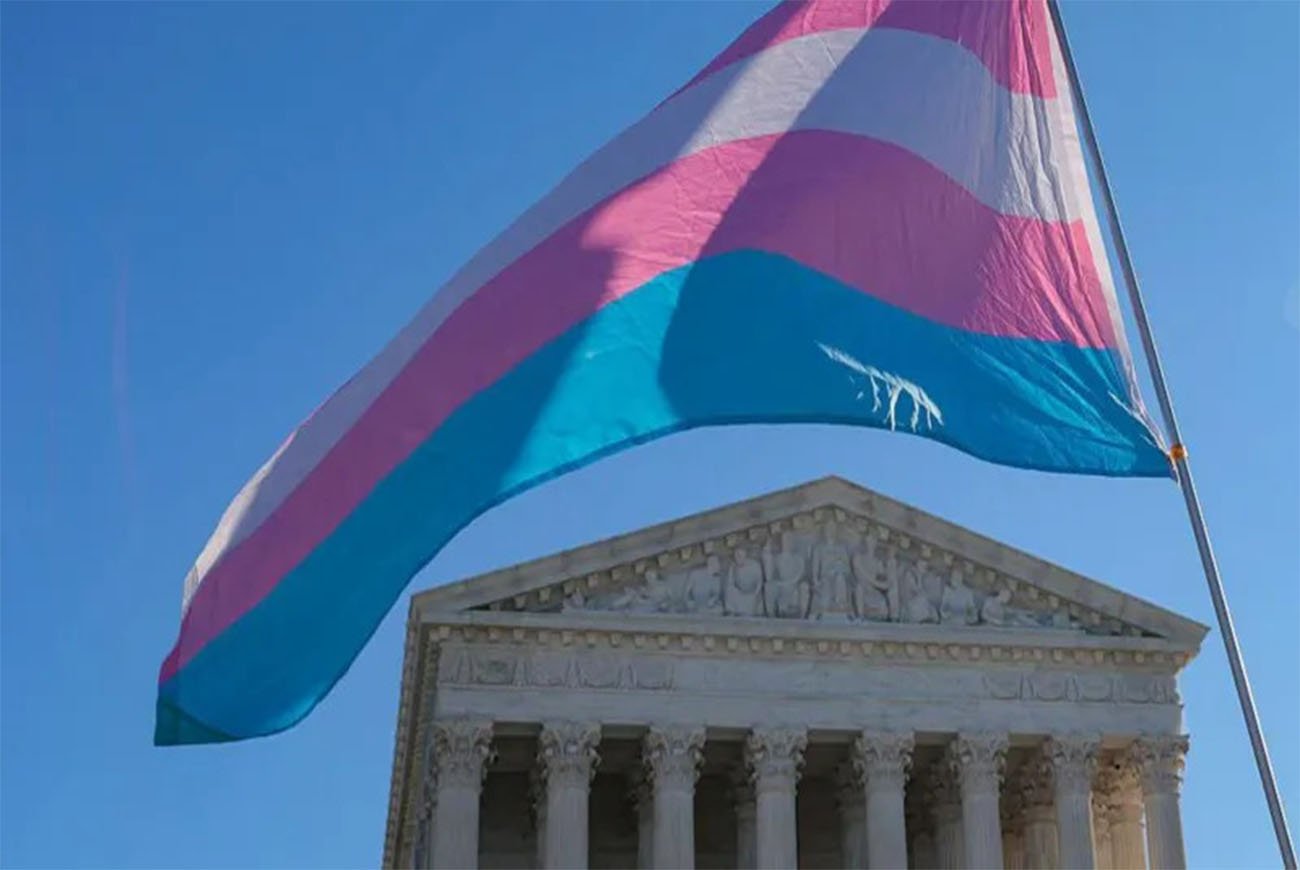
US Supreme Court upholds bans on transgender women in female school and college sports
The US Supreme Court has ruled that states can ban transgender women from competing in female school and college sports. The decision is a landmark moment in the ongoing debate over transgender rights, athletics, and the interpretation of anti-discrimination laws.
The court considered cases from students in two different states who had challenged bans on participation. The two states, Idaho and West Virginia, enacted laws that required public school and college sports teams to compete in accordance with their sex recorded at birth. The laws were among the first of their kind, and they have since inspired similar legislation across the country.
One of the two challenges said the ban violates equal rights protections in the US Constitution. The other said it contradicts civil rights laws. More than two dozen states have enacted bans since Idaho did so in 2020. The issue has become a flashpoint in American politics, dividing lawmakers, activists, and the public.
Under those state bans, a transgender woman – a biological male who identifies as a woman – is not permitted to compete in female sports at schools and colleges. The bans have been praised by supporters as necessary to protect the integrity of women’s sports and criticised by opponents as discriminatory.
The Supreme Court decision
All nine justices on the court decided the state bans do not violate a civil rights law called Title IX which prohibits sex-based discrimination in schools. The unanimous decision on that point was a significant blow to opponents of the bans.
But the judges were split along ideological lines on whether the bans contravene the Constitution’s 14th Amendment guarantee of equal protection under the law. The six conservative justices said it did not violate the constitution but the three liberal justices disagreed. The division reflects the broader political and cultural divide on the issue.
“The Constitution and Title IX do not require an overhaul of women’s and girls’ sports throughout America,” wrote Justice Brett Kavanaugh, who authored the ruling. His words were a clear endorsement of the states’ authority to regulate participation in sports.
In her partial dissent, Justice Sonia Sotomayor said the majority opinion had applied “a diminished view of equal protection” to sports. Her dissent was a powerful rebuke of the majority’s reasoning.
The challenges and the rulings
The challenge launched in Idaho came from a transgender woman, Lindsay Hecox, a long distance runner, who lodged it shortly after the law was enacted. She was later granted an injunction by both a district court and an appeals court. Her case became a symbol of the broader fight for transgender rights.
State lawmaker Barbara Ehardt, who introduced the law, said at the time of its passing that it would ensure “boys and men will not be able to take the place of girls and women in sports because it’s not fair”. Her comments reflected the concerns of supporters who argued that transgender women had an unfair biological advantage.
But in the appeals ruling, a panel of three judges found that the Idaho law violated constitutional rights. They said the state had failed to provide evidence that its ban protects “sex equality and opportunity for women athletes”. The ruling was a significant victory for transgender rights advocates.
West Virginia Attorney General JB McCuskey said the ruling was a victory for common sense and would give all states “the clarity and confidence to ensure fairness and safety for female athletes today and for generations to come”. His comments were echoed by supporters of the bans across the country.
Reaction from advocates and opponents
But the Human Rights Campaign (HRC), which advocates for the LGBT community, criticised the decision. “This ruling is heartbreaking for transgender student athletes who are being forced to sit on the sidelines simply for who they are,” said HRC President Kelley Robinson. Her words captured the disappointment and anger felt by many in the transgender community.
President Donald Trump, who celebrated the ruling and called it a “BIG WIN” in a social media post, made the issue of transgender athletes in women’s sports a regular focus of his 2024 election campaign. Last year, he signed an executive order that aimed to ban transgender women from competing on female sports teams in schools and colleges.
Following that decision, the NCAA, the governing body for US college sports, banned transgender women from competing in women’s sports. The move was a significant step in the effort to restrict participation.
The scientific debate
Supporters of the bans argued that transgender women had a biological advantage over athletes who were recorded female at birth. When the International Olympic Committee (IOC) announced in March it was going to limit the women’s category of Olympic sports to biological females, it said its working group reviewed the latest scientific evidence over the previous 18 months and had concluded there was a “clear consensus” that “male sex provides a performance advantage in all sports and events that rely on strength, power and resistance”.
Those who opposed the bans argue that they unfairly discriminated against transgender students and dispute whether there is a scientific consensus that transgender women and girls have an inherent advantage. The debate over the science is likely to continue, with both sides citing studies to support their positions.
The political and social context
The Supreme Court decision comes at a time of intense political and social debate over transgender rights. The issue has become a central focus of conservative political campaigns, with lawmakers in numerous states introducing legislation to restrict the rights of transgender people.
The bans on transgender athletes are part of a broader effort to regulate the lives of transgender people, including restrictions on healthcare, bathroom access, and participation in public life. The debate is deeply polarised, with little common ground between the two sides.
The legal implications
The Supreme Court’s decision is likely to have significant legal implications. It reinforces the authority of states to regulate participation in sports and provides a legal framework for other states to enact similar bans.
The ruling also clarifies the interpretation of Title IX and the 14th Amendment, at least for the time being. However, the issue is likely to continue to be litigated, with future cases testing the boundaries of the decision.
The human impact
Beyond the legal and political implications, the decision has a profound human impact. Transgender student athletes across the country are now facing uncertainty about their ability to compete in the sports they love.
The ruling is a reminder of the challenges faced by transgender people in the United States, who continue to fight for recognition, acceptance, and equality. The journey towards full equality is far from over.