President Donald Trump is turning up the heat on the US Congress to pass the SAVE America Act, which would require people to provide ID and proof of citizenship to vote and which has failed to gain support in the Senate. The legislation has become a flashpoint in American politics, dividing lawmakers along party lines and igniting a fierce debate about voting rights, election integrity, and the future of American democracy.
Trump has said he will not sign a separate bipartisan housing bill into law until Congress approves the Safeguard American Voter Eligibility Act (SAVE). He considers passing SAVE a “national emergency”, framing it as essential to protecting the integrity of US elections. The housing bill, which has broad bipartisan support, is now being held hostage by the president’s demands.
But Senate Majority Leader John Thune has so far avoided bringing it up for a vote and has resisted calls to end the filibuster in order to overcome Democrats’ opposition because he said it simply doesn’t have enough support. His reluctance reflects the political realities of a closely divided Senate, where 60 votes are needed to advance most legislation.
Meanwhile, some Republican-led states have taken up the cause to introduce their own proof-of-citizenship bills, bypassing the federal gridlock and attempting to implement similar requirements at the state level. These state-level efforts have further intensified the national debate.
Democrats say the SAVE legislation disenfranchises eligible voters, while Republicans say it is necessary to prevent voter fraud. The battle lines are drawn, and the outcome will have profound implications for how Americans vote.
What would the SAVE act do?
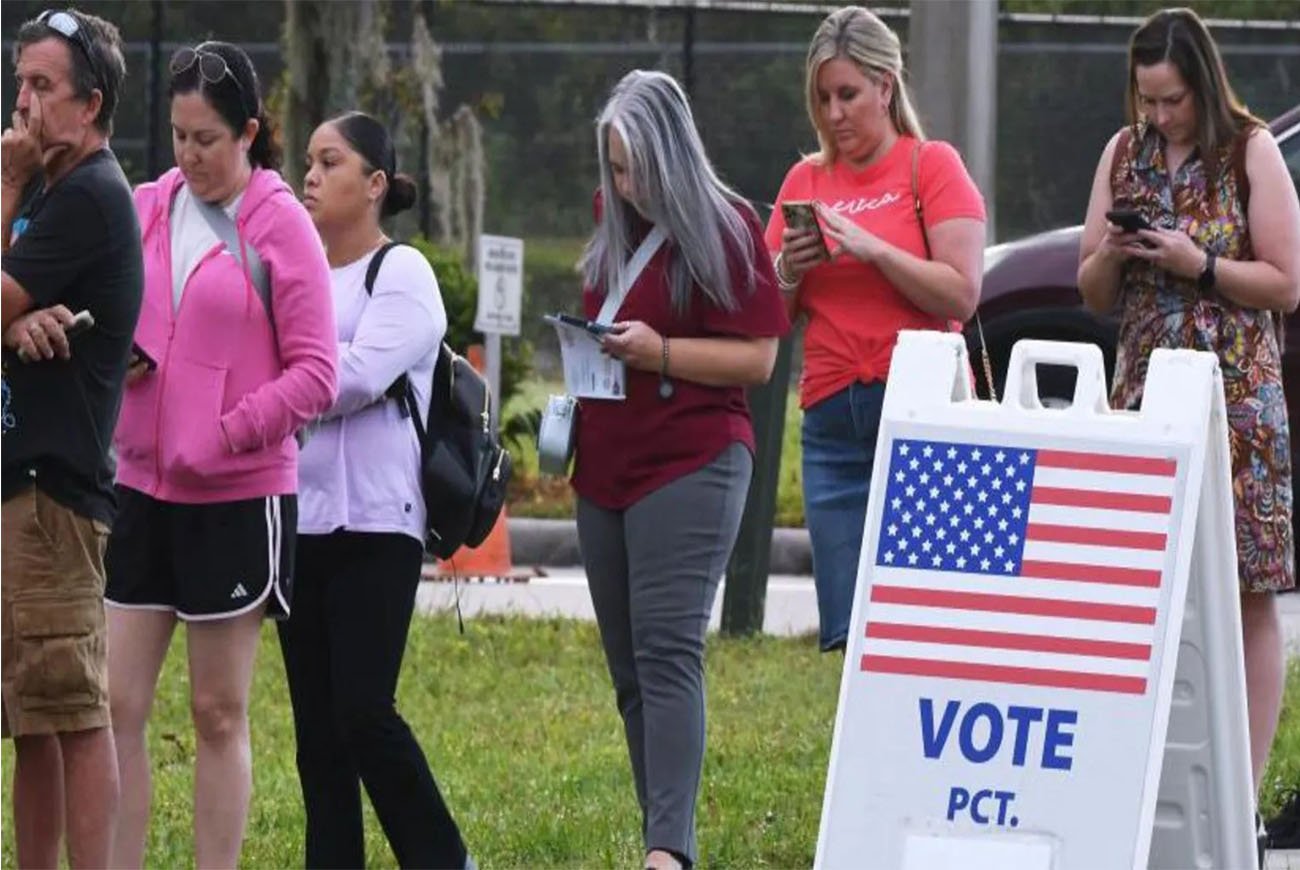
The SAVE act would require Americans to prove they are US citizens when they register to vote. It would also mandate showing a valid photo identification before they cast their ballots. The requirements would apply to all federal elections, creating a uniform national standard where none currently exists.
Some states already require voters to present valid photo identification at the polls. Federal law mandates that voters in national election be US citizens, but it does not require mandatory proof of citizenship, as the proposed legislation would. The patchwork of state laws has created confusion and inconsistency, which proponents of the SAVE act argue must be addressed.
Voter ID is a popular idea with US voters. A Pew Research Center poll from last year found 83% of respondents favoured requiring all voters to show government-issued photo ID, including 71% of Democrat or Democratic-leaning voters and 95% of Republican or Republican-leaning voters. The broad support for voter ID suggests that the issue is not as polarising as other aspects of the legislation.
Under the legislation, election officials who register a voter without obtaining the required proof of citizenship could face criminal penalties. This provision has alarmed voting rights advocates, who argue that it could deter election officials from doing their jobs and lead to the wrongful prosecution of well-intentioned public servants.
The SAVE act would also establish a process for people whose names have changed to submit additional documents to verify their identity. This provision has drawn particular concern for individuals who changed their names after marriage. Women who took their husband’s surname, for example, might face additional hurdles in proving their citizenship, potentially disenfranchising millions of voters.
An estimated 21 million Americans do not have documents proving their citizenship readily available, and 2.6 million lack any form of government-issued photo ID, according to the Brennan Center for Justice, a liberal-leaning think tank, and the University of Maryland’s Center for Democracy and Civic Engagement. These individuals, many of whom are low-income, elderly, or from minority communities, would face significant barriers to voting under the proposed legislation.
What does Trump say?
President Trump has been urging his Republican party to push the measure through both chambers of Congress so he can sign it into law. He told House Republicans before they passed a version of the bill in February: “I’m not going to sign anything until this is approved.”
“It’ll guarantee the midterms,” he said, referring to November’s congressional elections. “If you don’t get it, big trouble, my opinion.” His comments reflect a belief that the legislation would benefit his party by making it harder for certain groups to vote.
Traditionally, the president’s party performs poorly in the congressional elections that fall halfway through their terms. Trump is hoping that the SAVE act will help Republicans buck that trend by mobilising their base and suppressing Democratic turnout.
Explaining his support for the bill, Trump has also repeated his claim that the 2020 election was stolen by massive voter fraud. While cases of small-scale voter fraud do occasionally emerge in US elections, no proof has emerged of such corruption on a scale that would alter the result of a White House vote. The claim has been repeatedly debunked by election officials, courts, and independent investigators.
Members of the president’s party, by and large, support the legislation in its original form. However, complicating the matter, Trump has attached additional provisions. These include a proposed ban on postal ballots, with certain exceptions, such as for voters with disabilities or US military members.
But Republicans do not unanimously back a clampdown on mail-in balloting, which is popular in many US states. In some states, mail-in voting has been used for decades without incident, and attempts to restrict it have met with bipartisan opposition.
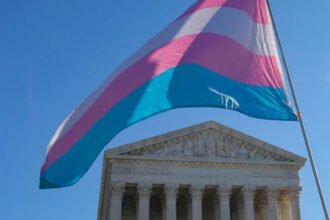
Trump has also added other amendments unrelated to elections, in order to draw Republican support. These include a ban on transgender surgery for children and on transgender athletes in women’s sports. These provisions are designed to appeal to the conservative base, but they also complicate the path to passage by introducing divisive social issues into an already contentious debate.
Is the SAVE act likely to pass the Senate?
To become law, the new bill must clear both the House and the Senate. But it is unclear if and when the Senate will vote on the measure. Democrats have declared the bill “dead on arrival”, signalling that they will not support it in its current form.
An older version of the legislation passed the House in February, mostly along party lines, in a 218-213 vote. The narrow margin reflects the deep partisan divide on the issue.
But with Republicans holding a 53-47 majority in the Senate, Thune does not have the 60 votes he would need to pass the bill. The filibuster, a procedural tool that requires a supermajority to end debate and bring legislation to a vote, stands in the way.
Some have urged Thune to change the filibuster rules by lowering the threshold needed to pass such a bill to a simple majority of 51. But Thune has resisted pressure to eliminate the super-majority threshold. He has argued that doing so would undermine the Senate’s deliberative function and lead to a more polarised and unstable legislative process.
Republicans have also encouraged Thune to use a “talking filibuster”, which would require round-the-clock speeches on the chamber floor by Democratic senators as they seek to stall a final vote on the legislation. This tactic, while dramatic, would be unlikely to change the outcome.
“This particular approach in terms of the process is much more complicated and risky than people are assuming at the moment,” Thune told reporters. His caution reflects the political risks of a high-stakes showdown that could backfire on his party.
Republican Senator Lisa Murkowski of Alaska said she would not back the measure. Her opposition is significant, as she is one of the few Republican senators willing to break with her party on key issues. Without her support, the bill’s prospects in the Senate are even more uncertain.
Previously, Democrats have also tried – unsuccessfully – to enact nationwide voting rules, as opposed to the current patchwork of state-by-state measures. But the Freedom to Vote Act and the John Lewis Voting Rights Advancement Act did not make it through Congress under the Biden presidency. The failure of those bills highlights the difficulty of passing major voting legislation in a polarised political environment.
The state-level battle
While the SAVE act languishes in Congress, Republican-led states are moving forward with their own proof-of-citizenship legislation. Several states have already passed laws requiring voters to provide proof of citizenship when registering to vote, and others are considering similar measures.
These state-level efforts are part of a broader push to tighten voting rules, driven by concerns about election integrity and the unsubstantiated claims of widespread fraud. Critics argue that these laws are designed to suppress turnout among minority and low-income voters, who are less likely to have the required documentation.
The Supreme Court has weighed in on the issue in the past, ruling that states have broad authority to set their own voting rules. However, the Court has also struck down laws that it found to be discriminatory or overly burdensome.
The legal battles over proof-of-citizenship requirements are likely to continue for years, with both sides seeking to shape the rules that govern American elections.
A deeply divided nation
The debate over the SAVE act is a reflection of a deeply divided nation. On one side, proponents argue that the legislation is necessary to protect the integrity of elections and restore public confidence in the democratic process. On the other, opponents argue that it is a solution in search of a problem, designed to disenfranchise eligible voters and undermine the right to vote.
The outcome of the debate will have profound implications for American democracy. If the SAVE act becomes law, it would represent one of the most significant changes to voting rules in decades. If it fails, the fight over voting access will continue at the state level, with no end in sight.