
Newly obtained police body-worn video has laid bare the web of lies told by the man convicted of killing 18-year-old Henry Nowak. The footage, released following a BBC request, offers a chilling glimpse into the moments after the fatal stabbing and reveals how the murderer repeatedly misled officers.
Vickrum Digwa was sentenced to life imprisonment with a minimum term of 21 years for the murder of the Southampton university student, whom he stabbed multiple times last December. The newly released footage shows Digwa persistently spinning what the Nowak family has condemned as “wicked lies”—claiming he was the victim of a “racial attack” and that Henry was “obviously drunk.”
The video also substantiates the Nowak family’s assertion that Digwa was “never handcuffed”—a stark contrast to Henry, who lay dying in restraints. The family has described the disparity in the men’s treatment by Hampshire Police as “unbearable.”
Earlier footage showing Henry in handcuffs sparked national outrage and contributed to violent disorder in Southampton. Hampshire Police have now confirmed to BBC South that Digwa was “never handcuffed” during the four days he spent in custody before being charged.
In a statement read outside court earlier this month, Henry’s father, Mark Nowak—whose family is from Chafford Hundred in Essex—drew a painful comparison between the “inhumane and degrading” treatment his son received and the “decency” shown to his killer.
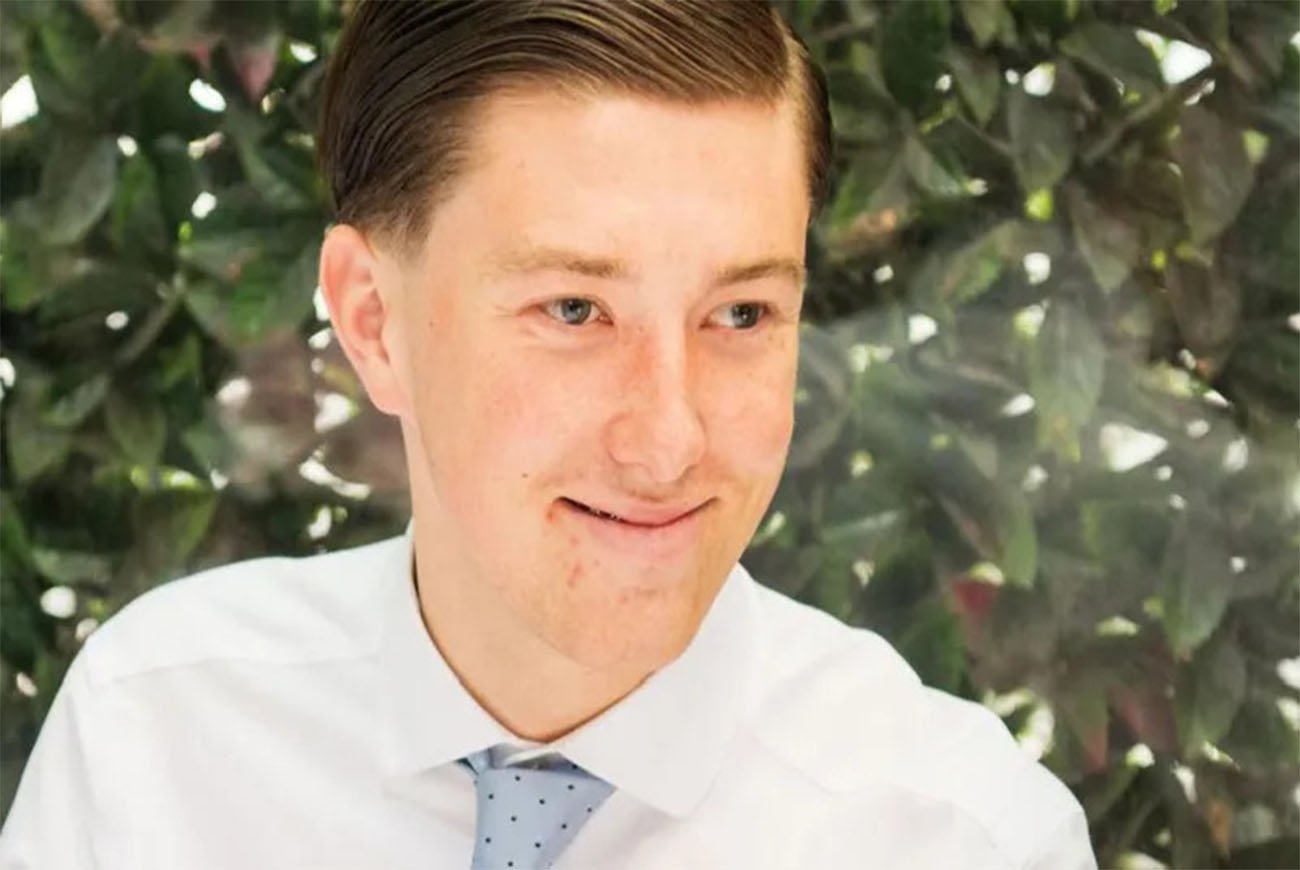
Family photograph
A young man wearing a white shirt and blue tie smiles in front of a green-leaved bush. Henry has light brown hair.
The Nowak family has said that the last words Henry heard were from an officer reading him “his rights” after his arrest.
In the additional footage, Digwa repeats his false narrative: that he was acting in self-defence, that Henry was drunk, that Henry had “barged” into him, used a racial slur, and told him he thought Digwa was a “bad man.”
“I said, ‘Yeah, I am a bad man.’ He then started recording me,” Digwa tells officers.
“Obviously then I’ve just [inaudible]—I pushed him. He’s then grabbed me, started grabbing my turban, pulled my hair, started punching me and all this sort of stuff.”
However, Southampton Crown Court heard that on the night of the stabbing, Henry’s blood alcohol level was low enough to pass a breathalyser test.
Crucially, Digwa never mentions that he stabbed Henry multiple times. As a result, officers initially failed to believe Henry when he told them he had been stabbed, and it took eight minutes for them to discover the fatal wound to his chest.
Hampshire and Isle of Wight Constabulary
Two stills from body-worn footage show a dark-haired, bearded man at night, wearing a dark top.
- Left: Digwa with his hair tied up after the stabbing.
- Right: Digwa with his hair loose when police arrived.
During the murder trial, the jury heard that Digwa repeated his fabricated account in police interviews following his arrest: that Henry had knocked off his turban and that, with “his hair in his eyes, he stabbed out twice, but acted in self-defence.”
But images from video evidence—taken after the stabbing but before police arrived—showed Digwa’s hair “tied up on his head neatly.” On officers’ bodycam footage upon arrival, however, it was “undone and hanging loose.” Prosecutors told the court this demonstrated the falsity of Digwa’s claims and showed his “dishonest claim of self-defence taking root from the outset.”
The latest footage, released to the BBC by the Crown Prosecution Service and Hampshire Police, is time-stamped at 23:47 GMT—the moment medics arrive and take over CPR from officers who had been trying to save Henry’s life.
As resuscitation efforts continue, Digwa complains about the flashing emergency vehicle lights, asking the questioning officer to “turn the flashes off.” When told “no, we can’t I’m afraid,” he asks if they can move “so it’s not too much in my eyesight.”
The officer then checks Digwa’s personal details via radio—portions of which were muted by police in the nine-minute-long footage. It is only after the officer and a female colleague discuss a video filmed by bystanders that Digwa is arrested.
Digwa’s Arrest
When the male officer addresses Digwa again, he says: “This is really important, OK. The time now is 11.55.”
Digwa complains: “I’m tired.”
Officer: “OK, it’s important, mate, alright. At this time, I’m arresting you on suspicion of attempted murder, OK?”
Digwa: “What?”
Officer: “You don’t have to say anything, but it may harm your defence if you do not mention when questioned something which you may later rely on in court.”
Digwa: “What do you mean attempted murder? Why am I getting arrested?”
Officer: “Anything you do say may be given in evidence. OK? The necessity is for a prompt and effective investigation, OK? And preventing further harm and injury. You’ve got your side of the story, mate. We don’t know what’s gone on here, OK? So we need to find out. OK?”
As the video draws to a close, medics continue their attempts to resuscitate Henry, who is eventually pronounced dead at 00:37 GMT on 4 December 2025.
The footage ends before Digwa is placed in a police van, but Hampshire Police have confirmed to the BBC that he was “never handcuffed”—a fact first disclosed by the Nowak family after his sentencing.
In a statement, Mark Nowak said: “He was never handcuffed at all, and as Vickrum Digwa himself told the court, whilst under arrest for Henry’s murder, police even took him to the kitchen so he could choose his food. The contrast is unbearable.”
Video caption (1:10):
The Nowak family said Henry’s murderer was “afforded decency” and “never handcuffed at all.”
Before sentencing Digwa, Judge William Mousley KC described Henry as a “much-loved, kind, hard-working and ambitious young man.”
Addressing Digwa directly, the judge noted that Henry was “filming you” and that “you… grabbed his phone, removing it from him.” He continued: “It would not be unreasonable to conclude that Henry would have wanted his phone back, believing it had been stolen from him or that he had been robbed. That may have led to a physical struggle between you and him.”
The judge told Digwa that Henry had been “defenceless” and added: “I am sure that Henry had said nothing racist. You are the only person to make that claim, and it is completely at odds with his previous character.”
Hampshire Police have apologised to the Nowak family for the way Henry was treated by its officers, and an investigation by the Independent Office for Police Conduct (IOPC) is currently underway.
The Attorney General’s Office has referred Digwa’s minimum 21-year life sentence to the Court of Appeal under the Unduly Lenient Sentence (ULS) scheme. A full inquest into Henry Nowak’s death is scheduled to take place in Winchester next year.
This response is AI-generated, for reference only.








One Comment
Lorem ipsum dolor sit amet, consectetur adipisicing elit. Minima incidunt voluptates nemo, dolor optio quia architecto quis delectus perspiciatis. Nobis atque id hic neque possimus voluptatum voluptatibus tenetur, perspiciatis consequuntur.