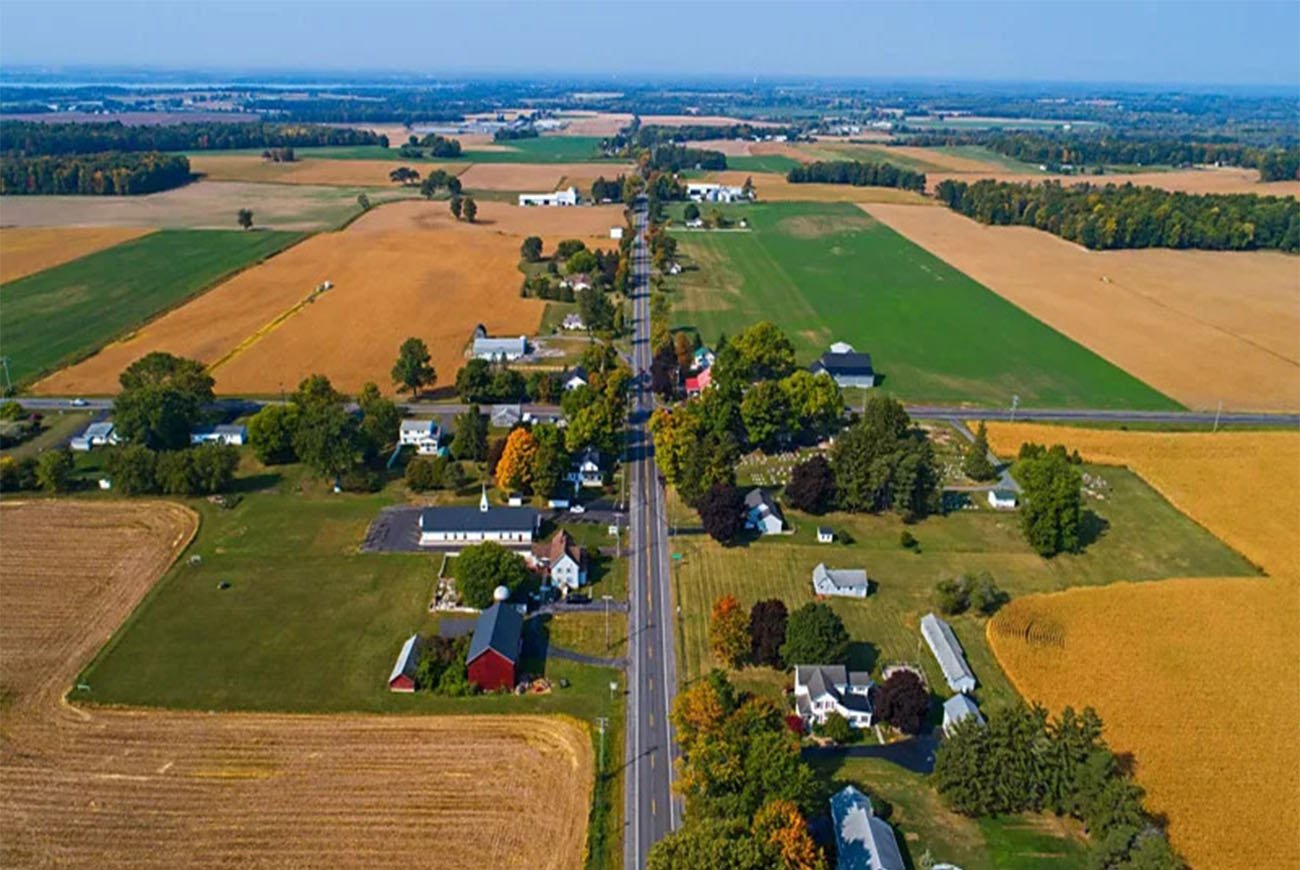
From roadside convenience stores to lonely landscapes, travellers are discovering little-known slices of Americana away from the host cities.
In the build-up to this summer’s Fifa World Cup, much of the attention was on the host cities and stadiums where the matches would be held. The world’s gaze was fixed on the gleaming new arenas, the meticulously manicured pitches, and the logistical challenges of hosting a tournament of this scale across a continent-sized nation. But after two weeks, something I never expected is happening: social media is flooded with feel-good videos of fans discovering the US that exists between skylines.
Some travellers were so struck by Costco and Walmart that they declared, “I’m in love with America.” As soon as a Norwegian man entered a Bass Pro Shop, he said, “Oh, gawd damn!” And when a Brit first laid eyes on a Buc-ee’s convenience store, restaurant, petrol station and supermarket wrapped in one he said, “This place is absolutely insane.”
With each wide-eyed video of travellers documenting their first encounters with everything from roadside convenience stores to ranch dressing, fans are highlighting the real America – one that’s rarely portrayed in films and TV, has nothing to do with politics and that many visitors often miss. Along the way, they’re not only reminding those of us who live here of the many quirks that make this country special; they’re also helping us fall back in love with it.
From sea to shining sea
Because the US is roughly 2,800 miles (4,500km) wide and World Cup matches are being played on both coasts, many fans are flying between host cities. But some are adopting our love of the open road by driving from match to match. In doing so, they are discovering kitschy roadside stops along Route 66 and the majesty of the US National Park system.
Watching videos of World Cup travellers stand in awe under the golden orange arches of Zion National Park, peer down on the Grand Canyon and marvel at Louisiana’s lowland swamps is a reminder of how stunningly diverse this nation is. The scale of the landscapes is almost incomprehensible to visitors from smaller countries, and their reactions capture a sense of wonder that many Americans have long since forgotten.
The open road has always been a defining feature of the American experience—a symbol of freedom, adventure, and possibility. For these travellers, it is a revelation. They are discovering that the US is not just a collection of cities but a vast, varied, and often breathtakingly beautiful country.
More like this:
- What it’s really like to attend the World Cup
- What are foreign football fans finding in the US?
- The science behind the World Cup grass
“I don’t think people realise how big, large, wild, full of wildlife, full of animals America is,” said the British man who visited Zion. “There is nothing quite like American national parks and state parks. It’s just incredible.”
After watching the reactions of these fans, I sought out Charlotte Russell, a clinical psychologist and the founder of The Travel Psychologist, to ask why I felt so moved. She suggested that, as an American, I might take my country for granted: “Just like we don’t notice our wallpaper at home, we don’t spend much time thinking about our own culture in our day-to-day lives; it’s normal to us.”
Her observation is a poignant one. We become desensitised to the extraordinary because we see it every day. It takes fresh eyes—the eyes of visitors—to remind us of what we have.
Little-known foods
Overseas, fast food is perhaps the best-known element of US cuisine. The golden arches of McDonald’s are recognised from Tokyo to Timbuktu, and the ubiquity of American food brands has shaped global perceptions of what we eat. But while most travellers coming to the World Cup have likely enjoyed a McDonald’s burger, others have been struck by our regional cuisine during their road trips.
Fans are discovering Southern US institutions like Waffle House, the wonder of tater tots (fried potato nuggets) and partaking in another American past time: filling up on petrol station food, like Beaver Nuggets at Buc-ee’s. These are not the foods that feature in glossy travel magazines, but they are the foods that define everyday life for millions of Americans.
One Scot who has been eating his way around the country, from Dunkin’ Donuts to Jamba Juice to an Atlanta seafood boil, needed to experience one final sugary breakfast before flying home. It was an emotional goodbye as he started crying, saying, “It’s so good” while eating his last syrupy, butter-covered takeaway waffle in the backseat of a car en route to the airport. His tears were not just about the food; they were about the experience—the warmth, the generosity, the sheer excess of it all.
Two of my favorite football podcasters, Ali and George from The England Pod, spent time in Kansas City. Along the way, they detoured to feast on ribs, brisket and barbecue. They marvelled that the US is so vast and diverse that the nation has myriad ways of barbecuing meats. After devouring Kansas City barbecue, they’re now planning a road trip to Dallas to try their local variety, even though they’re sceptical: “It’s tough to imagine anything beating this.”
So many fans have discovered the US’s ubiquitous calorie-rich ranch dressing and are apparently trying to smuggle it back in their suitcases that airport authorities have had to issue a warning about the legal carry-on limit. The devotion to ranch dressing has become a running joke, a symbol of American excess and ingenuity.
Alamy Buc-ee’s is a supermarket, petrol station, convenience store and restaurant rolled into one (Credit: Alamy)
American hospitality
While many of the viral videos show travellers marvelling at American culture, they’re also quietly displaying American generosity. Many are filled with comments recommending other sights to see along fans’ itineraries. Others even have offers of home-cooked meals en route to their next World Cup destination. In a country that has come under such heavy scrutiny and criticism for imposing travel bans, tighter restrictions or high visa rejection rates on many of the nations participating in this World Cup, it’s uplifting to see Americans open their doors and hearts to strangers.
In fact, for almost every video of visitors embracing American culture, there seems to be an instance of Americans embracing visitors. In Houston’s sweltering heat, a traveller reported that mass transit workers were handing out free cold drinks to fans. Across the nation, police officers have been recorded hyping up international fans. The warmth and enthusiasm have been palpable, a reminder that the US is not just a country of policies but of people.
But perhaps no place has been more welcoming of its visitors this summer than Lawrence, Kansas.
The Algerian national team chose Lawrence as their training base this summer, and the small college city’s 96,000 residents have gone all out to give the team a warm welcome. The school marching band has learned and played the Algerian national anthem, artists in the community have made a massive Algerian flag and workers at a local pub have learnt some Arabic to properly greet their Algerian guests. Hundreds of fans – many with no connection to Algeria at all – waited in the pitch black to welcome them when they arrived, with one fan saying: “Thank you to team Algeria for choosing [to stay in] our hometown.”
The story of Lawrence is not an isolated one. Across the country, communities have embraced visiting fans with open arms. From impromptu barbecues to guided tours of local landmarks, Americans have gone out of their way to make visitors feel welcome. It is a side of the country that rarely makes the headlines, but it is one that leaves a lasting impression.
These stories of human connection have made me and many other Americans emotional during this World Cup. They are examples of our country at its best, and they are coming exactly when I and so many other Americans need them the most.
“Many US citizens have been feeling down on their country, and sad that their nation is seen in a negative light overseas,” Russell told me. “With the negative news in the run-up to the World Cup… seeing people actually enjoying the US and its people feels more intensely joyful.”
She’s right: after consuming so many of these social media posts and videos, I find myself overwhelmed with a sense of national pride that I haven’t experienced for some time. The cynicism that often accompanies discussions of the country has been replaced by something simpler and more hopeful.
A summer of rediscovery
Before long, this summer-long cultural exchange programme will end, one country will be crowned the winner of the 2026 World Cup and everyone will return home – likely a few kilos heavier thanks to all the ranch dressing. But the memories will linger, and the connections that have been forged will endure.
For Americans, this World Cup has been an unexpected gift—a reminder of the beauty, diversity, and generosity of their own country. For visitors, it has been an eye-opening experience, a chance to see beyond the stereotypes and discover a nation that is far more complex and welcoming than they had imagined.
Here’s to hoping we continue to find tiny joys in the quirkiness of our own culture, take pride in the beauty of our wild landscapes and keep our doors open so that others can continue to see who we really are.
The power of fresh eyes
The World Cup has always been about more than football. It is a celebration of global unity, a chance for people from different cultures to come together and share their passion for the beautiful game. But this summer, something else has happened: the tournament has become a window into the soul of a nation.
The videos of travellers discovering America have struck a chord because they are authentic. They are not curated by tourism boards or filtered through political lenses. They are raw, unfiltered, and deeply human. And in a world that is increasingly divided, that humanity is something to be cherished.
As Russell pointed out, we often take our own culture for granted. It takes fresh eyes to remind us of what we have. The visitors to this World Cup have done that for millions of Americans, and for that, we are grateful.