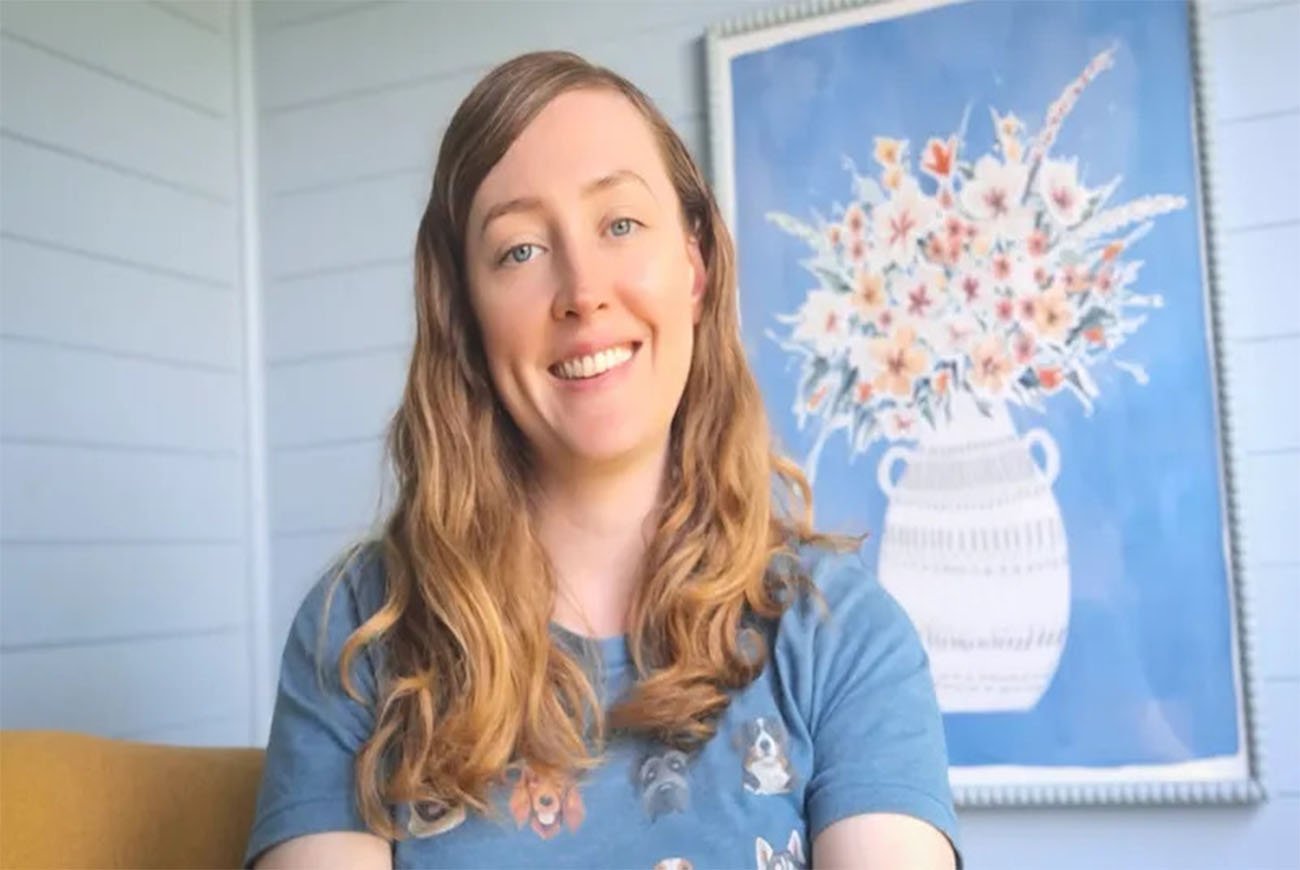
Jess King always assumed she would have children. To her, it felt like a natural path all women eventually followed—a milestone on the journey to adulthood, as inevitable as graduating, getting a job, or buying a first home. But as she got older, she couldn’t shake a persistent feeling that she wasn’t ready. With time, her doubts deepened.
“It turned into ‘Am I not ready for this, or do I not want this?'” she recalls. The question haunted her, surfacing at family gatherings, in quiet moments alone, and during conversations with friends who were starting their own families.
Everyone she spoke to with children said they’d been really sure about it and they had a maternal urge—a deep, instinctive pull towards motherhood that they had felt long before they became pregnant. “I didn’t have that and that made me start questioning it.”
Her uncertainty was not a rejection of children, but a recognition that the desire to become a mother was not something she could force. And as she listened to her own instincts, she realised that perhaps the path she had always assumed she would follow was not the right one for her.
Like Jess, more and more women in the UK are choosing not to have children. Research by the Centre for Social Justice (CSJ) suggests around three million women aged 16 to 45 are likely to stay childfree—a figure that represents a significant shift in social norms and expectations.
If women in this age bracket were still having children at the same rate as their grandparents, 600,000 more of them would be having children. The decline is stark, and it points to a fundamental change in how women are thinking about their lives, their futures, and their roles in society.
According to data from the Office for National Statistics (ONS), births in England and Wales fell for the fourth year in a row in 2025, to their lowest level in nearly half a century. The numbers are a reflection of changing attitudes, economic pressures, and a broader cultural shift away from traditional family structures.
The economic reality of motherhood
The CSJ’s report cites “a range of social and economic pressures” as the reasons behind their figures. It found that rising housing costs, delayed financial independence, later marriage and growing uncertainty about careers all played a role. The cost of raising a child has never been higher, and for many women, the financial burden is simply too great.
Financial pressures are also a consideration for Jess, who lives in west London with her partner, Ollie. The capital is one of the most expensive cities in the world, and the cost of housing, childcare, and everyday living is a constant source of anxiety.
Jess, a content creator, is self-employed, meaning her income is “up and down”, which would be a worry for her if she chose to have children. The unpredictability of freelance work makes it difficult to plan for the long term, and the financial demands of raising a child would add a layer of stress she is not sure she could handle.
“There are so many people struggling to get by. Some months, we are really scraping the pennies and it can be difficult.”
Several women I spoke to identified financial constraints as a limiting factor. But they also pointed to a broader set of considerations: anxieties about climate change, a strong commitment to their careers, an eagerness to travel, and a sense that today’s world offers them greater freedom of choice. The decision to remain childfree is not simply about money; it is about the kind of life they want to lead.
Finding community and validation online
Both Jess and Chy, 33, say they found support in online communities of people who had built happy lives without children. In a world that still often equates womanhood with motherhood, these digital spaces offer a sense of belonging and validation.
The hashtag #childfree features over 127,900 videos on TikTok, while #childfreebychoice has more than 68,100. Scrolling through them, I can see there are thousands of women discussing their reasons for not wanting to become mothers. Some talk about their careers, others about their mental health, and still others about their desire for freedom and independence.
Jess says social media didn’t influence her decision not to have children, but it “validated it” and made her feel more comfortable to share her thoughts on the subject. Seeing other women articulate similar feelings helped her realise that she was not alone, and that her decision was not abnormal or selfish.
Chy, a 33-year-old account manager from the Midlands, has also found a community of like-minded women online. In real life, while her parents and close friends have been supportive of her being childfree, her wider family could not understand her decision.
“I come from an African background,” she says, explaining that many of her relatives are from a culture where “women are supposed to have kids”. The expectation is deeply ingrained, and deviating from it is seen as a rejection of tradition and family values.
“Being someone with resistance to that idea was met with a lot of shock and disbelief.”
Chy wouldn’t feel comfortable being “responsible for someone else”. She says a child would “need the love I don’t think I could provide in abundance”. Her honesty is striking, and it reflects a growing awareness that motherhood is not for everyone.
Her priorities include pursuing her career and travelling, things she believes “would be a lot harder” with children. The freedom to explore, to take risks, and to focus on her own growth is something she values deeply.
The career and childcare dilemma
Wanting to focus on a career is one of the key reasons women choose not to have children, the CSJ report states. It cites a survey of more than 1,500 18-35-year-old women living in the UK, commissioned by the New Social Covenant Unit in 2023, which found that of those women who don’t want to become mothers, 38% said this was because they wanted to advance their career.
Almost half of respondents cited the steep cost of childcare and 41% said they would want to move into a bigger house if they were to have children. The financial and logistical barriers to motherhood are significant, and for many women, they are insurmountable.
Chy thinks that mothers don’t get enough support and that the cost of childcare and the current parental leave system make it “harder for women to live life outside of just being a mum”. The system, she argues, is not designed to support women who want to balance career and family.
She mentions one of her friends, who has had to cut her working hours to be able to do the school drop-offs and pick-ups. The sacrifice was necessary, but it came at a cost to her career and her financial independence.
“If those systems were to change, maybe my decision could have been swayed earlier on,” she tells me. The implication is clear: with better support, more women might choose to have children. But until then, the barriers remain.
The pressure to conform
Several of the women I spoke to described people they knew, or even strangers online, telling them they would change their minds about becoming mothers or were making the wrong decision. The pressure to conform is relentless, and it comes from all sides.
Sasha, an assistant manager of a cocktail bar, finds this scrutiny particularly acute in the small village where she lives. “Everyone has kids, has a boyfriend, gets married,” says the 28-year-old, who lives in Wales. “I’ve had a bit of backlash from people.”
Her decision to remain childfree has made her an outsider in her community, and she has had to develop a thick skin to deal with the criticism. “I’ve had a bit of backlash from people,” she says, her voice tinged with frustration.
Sasha and her boyfriend Tom, 31, would prefer to spend their money exploring the world. “We’re going to the Maldives this year, we definitely couldn’t afford that if we had kids.”
But despite some resistance from those around them, many told me that, in a broader sense, they felt having children no longer had to be the default. The social script is changing, and women are increasingly able to write their own stories.
Sian, a dog trainer, was brought up thinking that having children was simply “the thing you needed to do”, despite not having any “real deep desire to be a mum”. But at 37, she is now confident in her decision to be childfree.
Climate anxiety and the future
The conflicts in Russia and the Middle East, as well as climate change, factor into Sian’s choice. The world is a more uncertain place than it was a generation ago, and the prospect of bringing a child into it is fraught with anxiety.
“Do I want to bring a child into the world the way that it is right now? No. That was the answer and I’ve not changed my mind from that.”
Jess agrees. “Environmentally, is there even going to be much of a world in the future? There’s already so many people on the planet, do I really want to add to that?”
Her words capture a sentiment that is increasingly common among younger generations. The climate crisis is not just an abstract concern; it is a deeply personal one that shapes decisions about whether to have children.
She, too, is firm in her decision: “I would rather regret not having kids, than have kids and regret them. Had I been born into a different generation, I maybe would have had kids, even if I felt the same as I do now,” Jess says. “I would have probably felt more pressure and more expectation to go along with it.”
Sian, who lives in Staffordshire, has two lurchers called Bonnie and Oliver. “I’m happy with my dogs,” she says. “I care for them and they’re family to me.”
She adds: “I’m passionate about what I do and it meets an emotional need that I have. Maybe for others, a child meets that need.”
A new kind of fulfilment
The women I spoke to are not anti-child. They are not rejecting motherhood out of selfishness or immaturity. They are making thoughtful, deliberate choices about the kind of lives they want to lead, and they are finding fulfilment in other ways.
For some, it is about career. For others, it is about travel, freedom, or the desire to protect the planet. For many, it is a combination of factors that are deeply personal and often difficult to articulate.
What unites them is a sense of agency—a recognition that they have the power to choose their own paths, and that they do not have to follow the script that society has written for them.
The future of motherhood
The decline in birth rates is not a crisis to be solved, but a reflection of changing times. Women are more educated, more independent, and more empowered than ever before. They are choosing to delay motherhood, or to forgo it entirely, and they are building lives that are rich and meaningful in other ways.
The challenge for society is to adapt to these changes. We need better childcare, more flexible working arrangements, and a broader recognition that there are many ways to live a fulfilling life.
The women I spoke to are not alone. They are part of a growing movement that is redefining what it means to be a woman in the 21st century. And their voices are worth listening to.